Trump and Xi agree humans must decide major military actions by AI, Bessent says
U.S. Treasury Secretary says AI cannot act alone in major military operations; China has not confirmed the commitment
By gnews Newsroom 3 min read
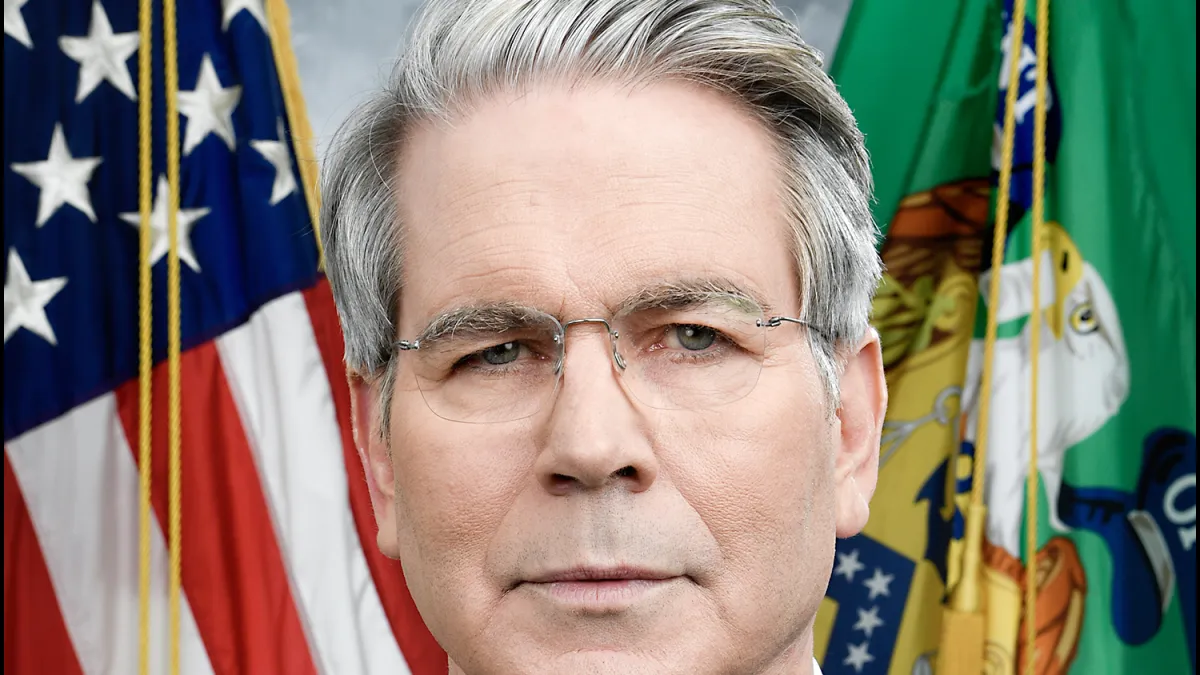
U.S. President Donald Trump and Chinese President Xi Jinping have agreed that humans must always be involved in military AI decisions, according to U.S. Treasury Secretary Scott Bessent. He shared the agreement on Friday (20) in an interview with CNBC's Squawk on the Street, upon returning from the meeting between the two leaders in Shenzhen, in southern China.
According to Bessent, artificial intelligence will not be allowed to act autonomously in major military operations. Reuters reported that he described the commitment as one of the key achievements of Trump's trip to Asia.
What Bessent said
In the interview, the secretary used the acronym SI, for superintelligence, a term the Trump administration has preferred for artificial intelligence. "Both sides agree that no major military operation should be launched without a human in the loop," he stated.
Bessent said the agreement is unrelated to the technological rivalry between the two countries. In the same conversation, he argued that U.S. AI labs must keep their lead. "The U.S. is ahead. We need to stay ahead," he said. He believes AI-based attacks originate from Chinese models, which he called dangerous.
So far, no joint statement with the text of the commitment has been released. Sources consulted by the report also have no record of confirmation from the Chinese government regarding the terms described by Bessent.
Nvidia chips remain under the same limit
The secretary stated that the policy on chip exports to China is not expected to change. The Nvidia H200 remains the most advanced chip that can be sold to the Chinese. According to Bessent, Trump drew "a very firm line" on that model.
He also said Chinese orders for the H200 have been scarce because the country is trying to develop its own chips. "I think they are probably many years behind," he said. Bessent also expects to see appropriate restrictions on chips and limits on remote access to that computing capacity.
On Monday (16), the U.S. Department of Commerce had already taken steps to restrict China's access to advanced AI chips, including through overseas data centers where Chinese companies rent processing power, according to Reuters.
Asked by CNBC whether the case involving Jensen Huang, former executive chairman of Nvidia, was discussed with the Chinese, Bessent simply replied: "No."
Next meeting will be at the G20
Bessent noted that this was the third meeting between Trump and Xi this year. The fourth is expected to take place at the G20 summit in Doral, a city in the Miami metropolitan area, scheduled for mid-December, according to Reuters. On trade issues, he spoke of a "robust discussion" without providing details.
Brazil is not part of the commitment. The debate over limits on the use of artificial intelligence in weapons and warfare, however, involves the world's two largest technology powers, and what they decide is likely to influence the rules discussed by other countries.
Sources: CNBC (transcrição da entrevista de Scott Bessent), Reuters, via Defense News, CNN Brasil
Frequently asked questions
What did Trump and Xi agree on regarding military AI?
According to Scott Bessent, they agreed that humans must always be involved in military decisions made by AI and that the technology cannot act alone in major operations.
Has China confirmed the agreement?
No joint statement was released, and sources consulted have no record of confirmation from the Chinese government regarding the terms described by Bessent.
Will Nvidia chip sales to China change?
No. Bessent said the H200 remains the limit of what can be sold to the Chinese and that he does not expect a policy change.