Google hires Blue Origin's New Glenn rocket to put AI satellites in orbit in 2029
Dedicated launch set for Q1 2029 will test solar-powered satellites with Google AI chips, each with data center rack capacity
By gnews Newsroom 3 min read
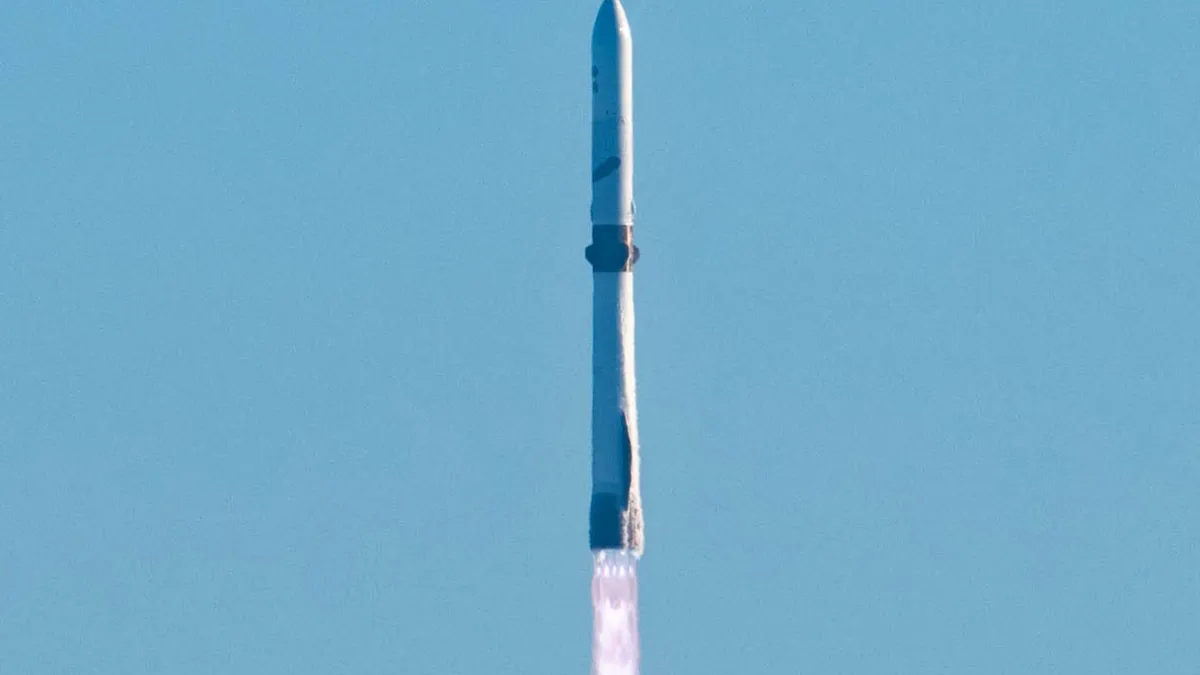
Google has signed a contract with Blue Origin, the space company owned by Jeff Bezos, to carry out the first heavy launch of Project Suncatcher, an initiative exploring how to take artificial intelligence infrastructure into space. The announcement was made this Thursday (19) by both companies. The mission will use the New Glenn rocket and is scheduled for the first quarter of 2029.
According to the official Google blog, the rocket will place the company's satellites into a sun-synchronous orbit, where a satellite passes over each point on Earth at the same solar time every day. Each satellite will have, in Google's words, roughly the capacity of a data center rack.
What is Project Suncatcher
The project was unveiled by Google last year and is described by the company as a long-term bet. The idea is to test whether a network of satellites powered by solar energy, carrying the TPUs—Google’s custom AI chips—can expand computing capacity off Earth, taking advantage of the sun’s energy in orbit.
The previous step was taken in October. Partnering with Planet, a satellite imagery company, Google placed a prototype with a TPU on board into orbit, sent on a shared SpaceX mission. The goal was to check how the chip behaves in space, according to Via Satellite. According to Engadget, this first AI server in low Earth orbit can only operate for 15 minutes at a time.
Travis Beals, the senior director in charge of the project, said the dedicated launch with Blue Origin is an important milestone in Suncatcher's long-term roadmap and that it builds on work already done with other satellite and launch partners.
What remains unknown
The companies did not disclose how many satellites will fly on the New Glenn, nor the contract value. Google also did not say who will manufacture the satellites or whether Blue Origin will handle future launches for the program.
The project is still in the research phase, and the 2029 mission is meant to test the idea's feasibility. The obstacles are well known: in space, the heat generated by the chips must be dissipated through pipes and panels, radiation can corrupt data in the processors, and the cost of each launch remains high.
Google is not the only one interested. Engadget points out that SpaceX is also experimenting with the idea of orbital data centers and that the startup Starcloud is working on the same concept.
What changes for Brazil
For now, nothing changes for Brazilian users. Suncatcher is an experiment, and there are no plans for commercial services based on these satellites, nor any information about use in Brazil. The race, however, shows how big tech companies are seeking alternatives to power AI data centers, which consume ever more energy on the ground.
Sources: Blog oficial do Google, Via Satellite, Engadget
Frequently asked questions
What is Project Suncatcher?
It is a Google research project that studies using solar-powered satellites with the company's AI chips to expand computing capacity in space.
When will Google's satellites be launched by Blue Origin?
The launch on the New Glenn rocket is scheduled for the first quarter of 2029.
How many satellites will New Glenn carry?
Google and Blue Origin have not disclosed the number. Each satellite will have roughly the capacity of a data center rack.