Oxê de Xangô to be installed at Brazil's Supreme Court three days before Black Consciousness Day
Piece linked to justice in the Yoruba tradition will be placed in the Noble Hall; ceremony is set for 6 p.m., three days before Black Consciousness Day.
By gnews Newsroom 3 min read
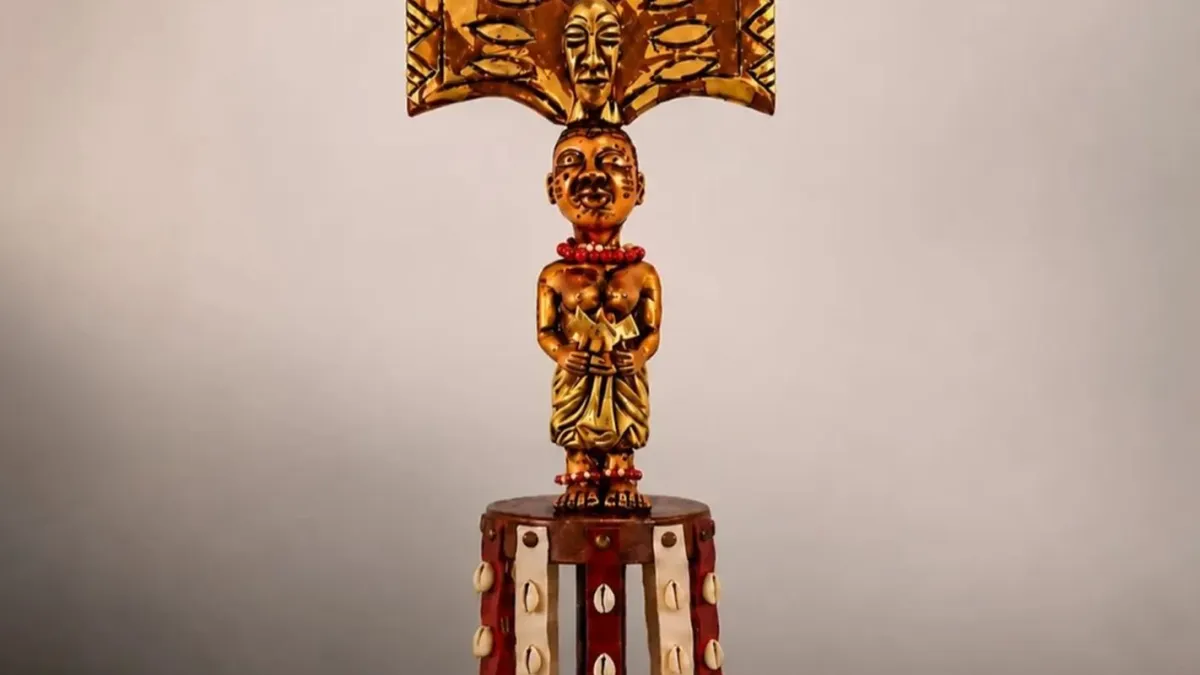
Brazil's Supreme Federal Court (STF) will inaugurate the Oxê de Xangô in the Noble Hall on Tuesday, November 17, 2026, three days before Black Consciousness Day, celebrated on November 20.
It is a double-headed axe. In the Yoruba tradition, the piece represents equality in judgment, without favoring either side, and is associated with Xangô, the orixá (deity) of law and justice in Afro-Brazilian religions.
The sculpture will be installed in the Noble Hall lobby, on the 2nd floor of the headquarters building. The ceremony is scheduled for 6 p.m.
How the ruling on religious symbols led to the installation
The initiative came from the STF's Secretariat of Equity, Diversity and Inclusion, in response to a request from the Institute for the Defense of the Rights of Afro-Brazilian Religions (Idafro). The organization filed the request in February 2025.
The request came after the court ruled in November 2024 that the presence of religious symbols in public buildings and agencies does not violate state neutrality or freedom of belief. The unanimous decision followed an appeal by the Federal Public Prosecutor's Office, which argued for the removal of such symbols.
In its decision, the Supreme Court held that the Constitution protects religious freedom and that such symbols are part of the country's historical formation. The Court's Plenary, for instance, keeps a cross commonly used in the Catholic faith behind the chief justice's chair.
Representatives see recognition of Afro-Brazilian traditions
Idafro President Hédio Silva Júnior said: “Pluralism is a constitutional principle that requires concreteness, practical action and not just discourse and rhetoric. Fortunately, Chief Justice Edson Fachin understood, as usual, the relevance of the collective claim of the terreiro peoples (Afro-Brazilian religious communities) and the Black people”.
For Hédio Silva Júnior, the installation represents the STF's commitment to racial equality and the promotion of diversity, “as essential vectors so that judicial decisions do not reproduce the ideologies or racial preferences of judges”.
Hélio dos Santos, president of the Center for Studies and Data on Racial Inequality, described the presence of the piece as an “encounter with the ideal of justice”. He said: “I am very happy with this initiative. For me, this act goes beyond symbolism, it consolidates a possibility for us to take the racial issue to another level”.
In Hélio dos Santos's assessment, the inauguration also continues a decision from December of the previous year, when the Supreme Court recognized the existence of structural racism in Brazil and serious violations of fundamental principles.
Inauguration takes place in November, ahead of the national holiday
In a statement, the STF said: “The installation of the Oxê de Xangô represents an initiative to recognize and promote African-rooted traditions, contributing to fostering respect for Brazilian religious and cultural diversity”.
Related topics include the electoral debate on racism and religious intolerance and Unesco's recognition of three memory sites of slavery in Brazil.
With information from Agência Brasil.
Frequently asked questions
What does the Oxê de Xangô represent?
It is a double-headed axe, associated with equality in judgment and with Xangô, the orixá of law and justice in Afro-Brazilian religions.
When will the Oxê de Xangô be inaugurated at the STF?
The ceremony is scheduled for Tuesday, the 17th, at 6 p.m., in the Noble Hall lobby.
Why is the STF installing a religious symbol?
The installation responds to a request from Idafro and follows the court's ruling that religious symbols in public buildings do not violate state neutrality or freedom of belief.