Black student reports four cases of racism in four months on college campus
19-year-old scholarship student says she was mistaken for a staff member on four occasions; she says she fears filing a complaint and losing her scholarship.
By gnews Newsroom 5 min read
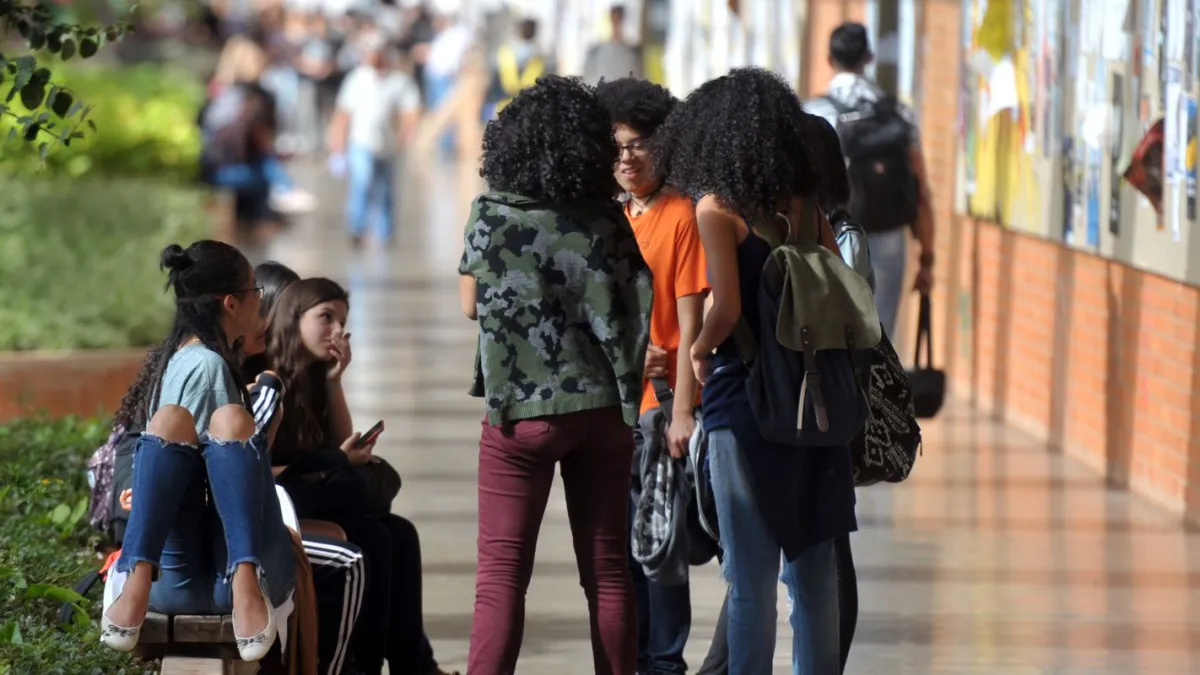
Iza, a 19-year-old Black student, reports four episodes of racism on campus in four months at a private elite institution in São Paulo, Brazil's largest city. On each occasion, she says she was mistaken for a staff member, even though she is a scholarship student.
Her account appears in an article published this Monday (16), at the start of Black Consciousness Week, in the scientific journal Psicologia & Sociedade. Researchers Carla Campana and Vivian Vieira, from Fundação Getulio Vargas in São Paulo, analyze how such situations shape Black students' experience in higher education.
Iza is a fictitious name; the authors withheld her program and institution to prevent identification. The student says the most striking episode involved a professor.
“A person sees you in the classroom and mistakes you for a staff member, it makes no sense”
“She came up to me, I was sitting down, [handed me a piece of paper and said] ‘can you take this paper over there?’. Then she [said] ‘oh, you don't work here, do you?’”
In both situations, the professor mistook her for a staff member. Iza sums up her interpretation of the episodes: “It's just the color”.
Two cases happened at the campus entrance
Before entering university, Iza lived on the outskirts of a city in the interior and attended public school. A private company pays her tuition and provides a living allowance through a scholarship program; she also worked as a freelance waitress for a catering service.
“One time it was at the turnstile, when I was coming in, the little guard stopped me and said ‘miss, you have to have your temperature checked’. Then, right after he asked, he said ‘never mind. You're a staff member, right?’”
“The sir stopped me and said ‘oh, you're a staff member, you don't go in this way’, and pointed to another small door”
The fourth episode involved a general maintenance worker. “I was walking by and he said: ‘you're a staff member, aren't you?’ So I said: ‘no’. It's exhausting to keep repeating it”.
Shame and fear of losing the scholarship limited her reaction
Iza reports that these encounters caused shame, guilt, and silencing. She says the way she dresses should not lead others to assume she works there.
“A white person, dressing the way I dress, I think she wouldn't be mistaken for a staff member”
“I confess that to this day I'm very afraid of losing the scholarship. I know that's not a reason, but that's the fear I have”
The article also cites research on racism in schools and universities and a court decision that increased compensation for student victims of racism at Uerj, Rio de Janeiro State University. Iza's account was not presented as a statistical measure of the entire university population.
Whiteness Pact helps interpret the episodes
The authors link her experience to the concept of the Whiteness Pact, formulated by activist and intellectual Cida Bento. The article cites a 2023 survey by the Instituto de Referência Negra Peregum and the project Sistema de Educação por uma Transformação Antirracista: 38% of people who experienced racism identified “school/college/university” as the location of the episode, the most frequently mentioned space.
“students from historically under-represented groups arrive in higher education needing to mold themselves to fit, a forced adjustment that reflects the narcissistic pact of whiteness”
“Black people are seen as invaders of what white people consider their private space, their territory”
The quote is from Cida Bento, co-founder of the NGO Centro de Estudos das Relações de Trabalho e Desigualdades. In 2015, British magazine The Economist included her among the 50 most influential people in the world in the field of diversity.
“Only 4% of white people said they completely agreed with the statement ‘I have some attitudes and practices that are considered racist’”
The article describes security approaches as an expression of structural racism in physical spaces.
“Not by chance, the security guard singles her out: while the white body is protected, the Black body is approachable – whether at a police stop or when leaving stores”
“In the security guards' attitudes, one sees how the narcissistic pact of whiteness operates subtly, deluding workers in precarious positions with the sensation of exercising legitimate power”
Article points to barriers to belonging
The researchers state that admission does not guarantee that Black students feel part of the university community. They describe obstacles that remain even with inclusion policies.
“symbolic and material barriers that reiterate the logic of structural racism”
“Simple admission does not guarantee belonging; on the contrary, it exposes Black students to the demand for constant adaptation to a racial order that marks them as bodies out of place”
“it cannot be solved with superficial representativeness nor with the inclusion of a few Black students to ‘add color’ to the environment”
“It demands confronting this narcissistic wound and the responsibility it imposes”
The authors acknowledge that the article draws on the experience of a single student and does not allow statistical generalizations. The broader research follows the university trajectories of 32 women who faced economic constraints.
“Silence and inaction in the face of racism are, in themselves, forms of perpetuating this pact, which can only be broken if it is admitted”
“Her testimony is socially representative, although not by statistical criteria”
Carla Campana states that the broader study also considers other obstacles faced by female university students.
“such as food insecurity, mental health issues, extreme fatigue, and other symbolic barriers”
For the researcher, institutions need to help the academic community identify racist structures and their effects.
“recognize the structures of racism and the way white people, even without the expressed intention to discriminate, act to protect their peers and maintain their privileges”
“Different cultures and identities need to receive equal respect and social value; and all voices need to count in the decision-making process”
With information from Agência Brasil.
Frequently asked questions
How many episodes of racism does Iza report?
She reports four episodes in four months, all involving being mistaken for a college staff member.
Why didn't Iza file a formal complaint?
She says she is afraid of losing her scholarship.
What does the cited research say about racism in schools and universities?
A 2023 survey found that 38% of people who had experienced racism identified school, college or university as the location of the episode.