Marginal Botafogo Reopens After Five-Day Repair Work
Stretch near Avenida Anhanguera gave way after rain on 9/11; road was repaired and signaled for traffic return.
By gnews Newsroom 3 min read
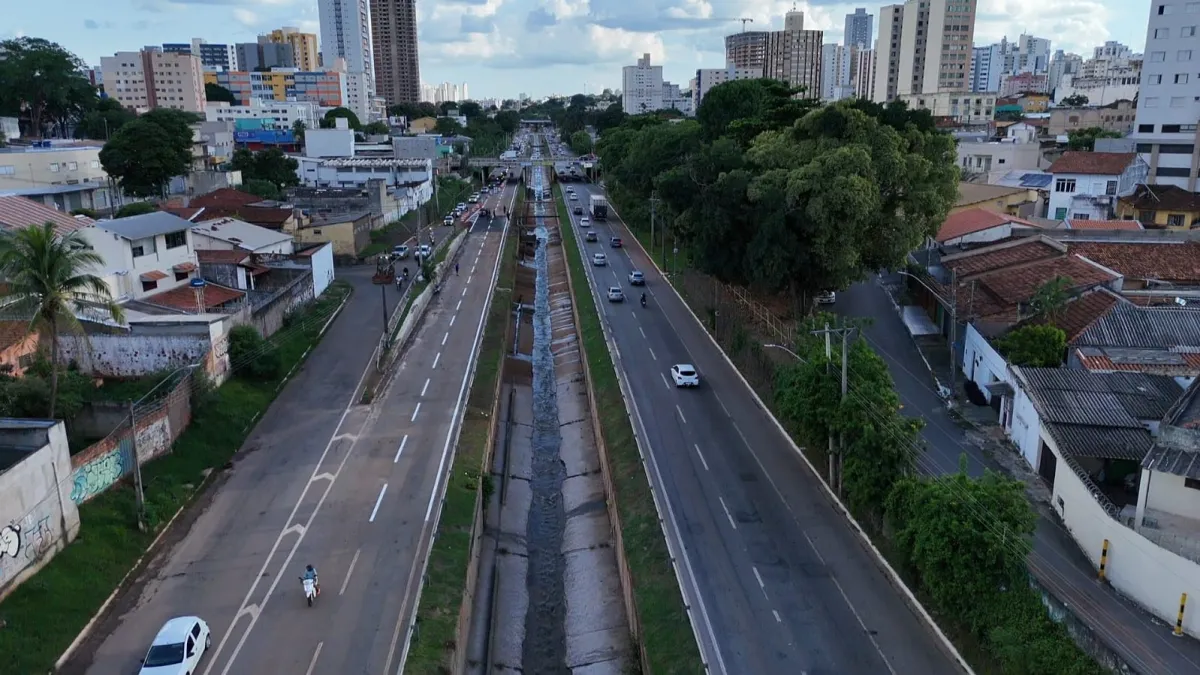
The Goiânia city hall reopened on Saturday (14/11) a stretch of Marginal Botafogo, a major avenue in Goiânia (capital of Goiás state, central Brazil), near Avenida Anhanguera. The road had collapsed after Monday's (9/11) rain and was repaired in five days.
Mayor Sandro Mabel stated that the work was completed faster than a previous intervention, which took almost 17 days. “This work on Marginal Botafogo shows that our Seinfra team is increasingly mature and prepared. An intervention of this size, which on another occasion took nearly 17 days, was finished in five days. It shows that the city is better prepared to solve such problems quickly, with integrated work across departments,” he said.
The services included shoring up the compromised section, restoring the area, and preparing the roadbed. Workers installed concrete pipes, placed rebar and concrete to reinforce the structure and contain erosion, carried out earthworks, and laid the asphalt cap.
Crews from the Secretaria de Infraestrutura Urbana (Seinfra, Goiânia's municipal infrastructure department) worked daily from 5 a.m. to 9 p.m. “Our teams were on site every day from 5 a.m. to 9 p.m. We had to restore the damaged stretch by installing concrete pipes, placing steel reinforcement, and filling with concrete to reinforce the containment and stop the erosion from advancing, in addition to the earthworks and asphalt paving,” explained Francisco Lacerda, Secretary of Urban Infrastructure.
How the Marginal Botafogo reopening was carried out
The Municipal Traffic Engineering Department isolated and signposted the area as soon as the problem occurred. After the repair was completed, the team installed new signage to allow vehicles through.
“Our team made the initial intervention to protect those using the road and monitored the work. As soon as the repairs were finished, we put up signs to allow immediate traffic release,” said Tarcísio Abreu, Secretary of Traffic Engineering.
The response is part of the city’s climate-event plan, organized into three levels by the Goiânia Civil Defense: attention, alert, and emergency. At attention level, forecasts are monitored; at alert level, crews are deployed to designated spots and risk areas are watched; at emergency level, roadblocks, detours, and area cordoning may be implemented.
Which teams monitor rainfall in Goiânia
The operation brings together the Metropolitan Civil Guard (GCM), the municipal departments of Traffic Engineering (SET), Urban Infrastructure (Seinfra), and Policies for Women, Social Assistance and Human Rights (Semasdh), along with the Companhia de Urbanização de Goiânia (Comurg, the city’s urbanization company). State teams, the Fire Department, and the Centro de Informações Meteorológicas e Hidrológicas de Goiás (Cimehgo, the state meteorological and hydrological center) also take part.
Goiânia city hall’s planning also factors in the impacts of the Super El Niño. Unveiled in October, the plan provides for monitoring and organizing responses to storms, flooding, intense heat, and low humidity. Forecasts from the National Institute of Meteorology (Inmet) guide state alerts sent by SMS and WhatsApp; Cimehgo supplements the information to identify areas with a greater likelihood of rainfall in Goiás.
Municipal Civil Defense maintains field teams and monitors different parts of the capital. According to the city hall, during heavy rain events the city has returned to normal within two hours.
Com informações da Prefeitura de Goiânia.
Frequently asked questions
Is Marginal Botafogo open now?
Yes. The stretch near Avenida Anhanguera was reopened for traffic on Saturday (14/11).
How long did the work on Marginal Botafogo take?
The repair was completed in five days.
What was done to fix the road?
The work included shoring with pipes, steel reinforcement, and concrete, earthworks, and asphalt paving.