China calls U.S. rule requiring license for AI chips to Brazil economic coercion
Beijing promises measures to defend its companies; U.S. rule affects Brazil, Singapore, Malaysia, Thailand, and Indonesia
By gnews Newsroom 3 min read
China accused the United States on Tuesday (17) of economic coercion with the new rule that requires a U.S. government license for the export of advanced AI chips to five countries, including Brazil. The criticism was made by Chinese Foreign Ministry spokesperson Guo Jiakun at a press conference in Beijing, one day after the measure was announced in Washington.
According to the spokesperson, the decision is "a typical example of economic coercion and extraterritorial application of the law." He also said the Americans are "abusively expanding the concept of national security" and said Beijing will take necessary measures to protect its legitimate rights and interests. Guo did not specify what those measures would be.
What the U.S. rule says
The rule was released by the U.S. Department of Commerce on Monday (16). It requires manufacturers to request authorization to ship advanced processors to Singapore, Malaysia, Thailand, Indonesia, and Brazil, which Washington considers at higher risk of diverting these components to China. Each request will be reviewed on a case-by-case basis.
The declared target is Chinese companies that use data centers in other countries to train artificial intelligence models with chips whose direct sale to China is already restricted. Giants such as ByteDance, Tencent, Alibaba, and Huawei maintain large data processing structures in these markets.
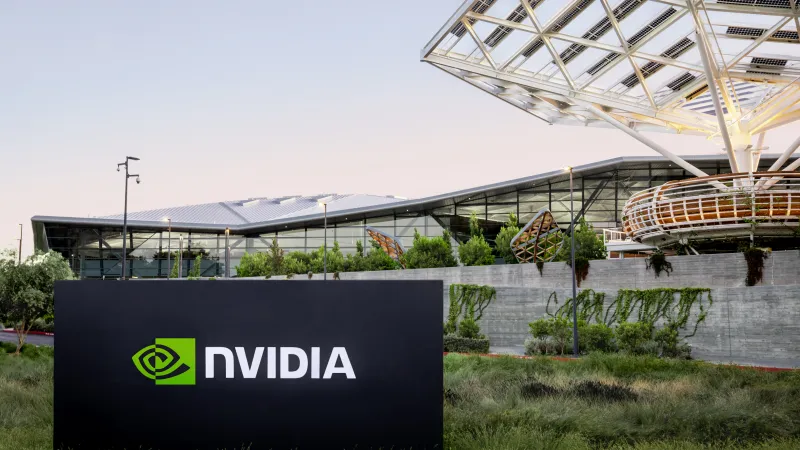
The rule is not a general ban. Shipments to companies headquartered in the U.S., or whose ultimate controlling parent is American, are exempt from the license requirement as long as they meet government information requirements. Nvidia processors, widely used to develop and train AI systems, are among the most exposed to the change.
The background: the Nvidia crisis
The tightening comes amid the U.S. investigation into Megaspeed, a cloud computing company in Singapore that has become a major buyer of Nvidia chips. According to the U.S. government, the company passed semiconductors to Chinese companies, including Alibaba, to train AI models.
A Megaspeed executive, Alice Huang, is suspected of espionage on behalf of China and had a romantic relationship with Jensen Huang, co-founder of Nvidia, who stepped down from the company leadership after the case became public. The two are not related. In a joint statement, the Commerce and Justice departments said they will apply the full weight of the law against Megaspeed if there is criminal activity.
What changes for Brazil
In practice, companies that want to bring cutting-edge AI chips from the U.S. to data centers in Brazil now depend on a license from Washington, except when they are American companies that fit the exception. This tends to weigh more heavily on groups from other countries, including Chinese ones, that plan to operate data centers in Brazilian territory.
Beijing's reaction raises tension between the world's two largest economies precisely as both prepare for high-level talks. There is still no information on what measures China may adopt or when the first licenses for Brazil will start being issued.
Sources: Olhar Digital, International Business Times UK
Frequently asked questions
What did China say about the U.S. rule on AI chips?
Chinese Foreign Ministry spokesperson Guo Jiakun called the measure economic coercion and extraterritorial application of the law and said Beijing will take necessary measures to protect its interests.
Was Brazil banned from buying AI chips from the U.S.?
No. The rule requires a U.S. government license for the export of advanced chips to Brazil and four other countries, with case-by-case review. Companies headquartered in the U.S. are exempt if they meet information requirements.
Why did the U.S. tighten the rules?
Washington wants to prevent Chinese companies from using data centers in other countries to train AI models with chips whose sale to China is already restricted. The measure comes amid the investigation into Megaspeed, based in Singapore.