Trump says U.S. will match China’s rare earth output in 10 months; China produces 5 times as much
Trump made the statement in Manila days before a new meeting with Xi Jinping; U.S. government data show a wide gap, and Goiás has a contested mine in the sector
By gnews Newsroom 3 min read
U.S. President Donald Trump said Tuesday (17) that the country will match China’s rare earths production in about 10 months. He made the statement to reporters in Manila, the capital of the Philippines, ahead of a meeting with leaders of the Quad, a group made up of the U.S., India, Japan and Australia.
“We’ll catch China in 10 months,” Trump said, according to CNN. He also said Americans are producing these minerals at an unprecedented level. In the version reported by the AFP news agency, the president attributed the timeline to others, using the phrase “they say,” without explaining who made the projection or what it was based on.
What the numbers show
Official data show that the gap remains wide. According to the U.S. Geological Survey (USGS), China produced 270,000 metric tons of rare earths in 2025, compared with 50,000 metric tons in the United States. In other words, China mined more than five times the U.S. volume.
The gap is even wider in refining. According to the International Energy Agency (IEA), China accounted for 61% of global mining in 2025 and controls 92% of worldwide processing. The U.S. processes only a small share of what it mines: most American facilities closed over the past two decades because they could not operate profitably.
The Trump administration has announced billions of dollars in investments in the sector, but some of the new plants are not expected to begin operating until the next decade. CNN contacted the Interior Department for details about the president’s projection.
Why rare earths matter
Rare earths are a group of elements used in magnets for electric motors, wind turbines, cellphones and military equipment. China imposed export controls on these minerals, and Washington responded by accelerating domestic production. After a meeting between Trump and Xi Jinping at last year’s APEC summit, Beijing agreed to suspend some of the restrictions.
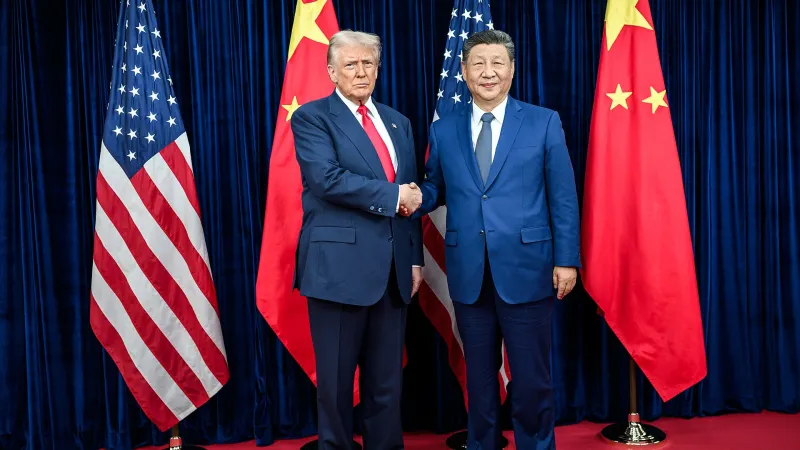
The issue is expected to come up again this week. Trump and Xi are scheduled to meet in the coming days, and rare earths are among the most sensitive issues in the two powers’ trade relationship.
The Goiás connection
The U.S. race runs through the interior of Goiás, a state in central Brazil. In April, mining company USA Rare Earth announced it had acquired 100% of Grupo Serra Verde, which owns the Pela Ema mine and processing plant in Minaçu, in northern Goiás. The deal was valued at US$2.8 billion, with US$300 million paid in cash and the remainder in shares of the acquiring company, according to Correio Braziliense.
Serra Verde is described as the only large-scale producer outside Asia of four types of magnetic rare earths, including dysprosium and terbium. That has put the Minaçu mine on the map in the U.S.-China competition for these materials.
In practice, Trump’s promise depends on two fronts: expanding mining and, above all, rebuilding refining capacity, which is now concentrated in China. The outcome of this week’s talks with Xi could indicate whether Beijing maintains or tightens its export controls.
Sources: CNN Brasil, AFP via Insider Paper, Correio Braziliense
Frequently asked questions
What are rare earths?
They are a group of elements used in magnets for electric motors, wind turbines, cellphones and military equipment.
How much rare earths does the U.S. produce compared with China?
According to the USGS, China produced 270,000 metric tons in 2025, while the U.S. produced 50,000 metric tons. China also controls 92% of global refining, according to the IEA.
What is Goiás’s connection to rare earths?
The Pela Ema mine, owned by Serra Verde and located in Minaçu, produces magnetic rare earths. U.S.-based USA Rare Earth acquired it in April in a deal valued at US$2.8 billion.