Anthropic Launches Claude Ship, with Agents That Review, Fix, and Approve Code on GitHub
Tool in beta for Team and Enterprise plans follows team-written rules and can release routine changes without waiting for human review
By gnews Newsroom 3 min read
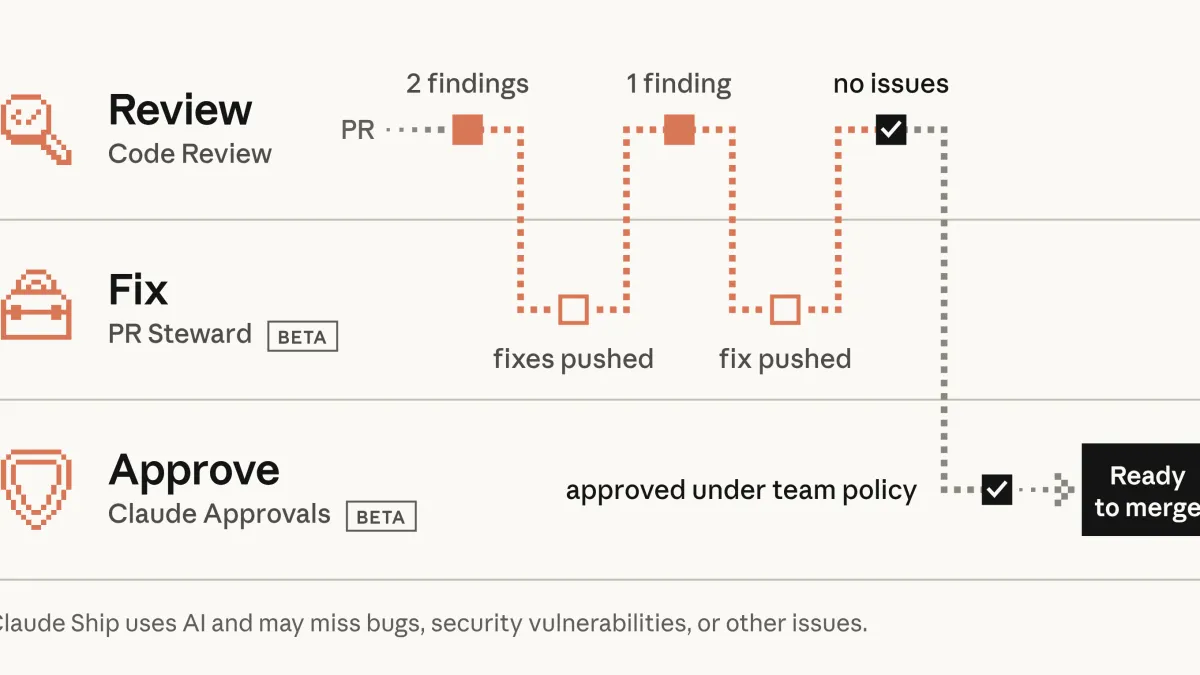
Anthropic launched Claude Ship on Monday (23), a set of three AI agents that take over the work after a developer opens a pull request on GitHub—a request to include a change in a project’s code. The tool reviews the change, fixes pointed-out issues, and can approve routine changes, always within rules defined by the team itself.
The product is in beta and is offered to companies on Claude’s Team and Enterprise plans, only for repositories hosted on GitHub.
How the Three Agents Work
The first is Code Review, which was already available to all customers on these plans. It analyzes the change request against the rest of the code, double-checks its own conclusions, and posts the issues it finds, sorted by severity. Each team chooses from three depth levels: fast, standard, or deep.
The second, called PR Steward, is new and handles fixes. It resolves failed automated tests, merge conflicts between code versions, and comments made during the review, whether by AI, other tools, or people. According to Anthropic, this agent was designed not to approve or merge changes on its own. For each fix, it leaves a comment explaining what it changed and how to undo it.
The third, Claude Approvals, also new, enforces an approval policy written by the team in a file inside the repository. With it, the AI can approve simple changes, such as documentation adjustments, and require sign-off from one or more people on more sensitive areas. The company recommends starting in observation mode, where the agent only logs the decision it would make, before making it a mandatory step.
For developers, the shortcut is the /ship command in Claude Code: after finishing a change, the developer pushes the code, opens the pull request, and lets the agents handle review and fixes. The command started rolling out in Claude Code and the desktop app on Monday.
Cost and Eligibility
Billing is based on token consumption, the processing unit of AI models. The cost varies according to the number and size of pull requests analyzed, the review depth chosen, and the volume of fixes made. Administrators can set monthly spending limits per repository. Claude Approvals has no fixed fee, but the analyses it triggers are billed.
Eligible Enterprise plan organizations can redeem at least $10,000 in credits for Claude Ship until January 15, 2027, with 30 days to use them. The product is not available for customers using zero data retention, the configuration designed for the U.S. health law HIPAA, or their own encryption keys.
Anthropic did not disclose prices in reais (Brazil’s currency) or a list of supported countries, and the announcement contains no specific information for Brazil. Activation is done by the account administrator, repository by repository.
What Anthropic Says About Results
The company says that on the team developing Claude Code, the number of merged changes more than doubled between June and September, while the share of changes that had to be reverted dropped more than 40%. The data is internal and not independently measured.
Anthropic itself includes a warning in the announcement: Claude Ship uses AI and may miss bugs, security vulnerabilities, and other issues. There is still no timeline for PR Steward and Claude Approvals to exit beta.
Sources: Anthropic (anúncio oficial), Anthropic (página do produto), Digital Trends, XDA Developers
Frequently asked questions
What is Claude Ship?
It is a set of three Anthropic agents (Code Review, PR Steward, and Claude Approvals) that reviews, fixes, and can approve pull requests on GitHub according to team rules.
Who can use Claude Ship?
Organizations on Claude’s Team and Enterprise plans with GitHub repositories. The product is in beta and does not support those using zero data retention, HIPAA configuration, or their own encryption keys.
How much does Claude Ship cost?
Billing is by token consumption and depends on the volume and size of pull requests. Anthropic did not disclose prices in reais (Brazil’s currency).