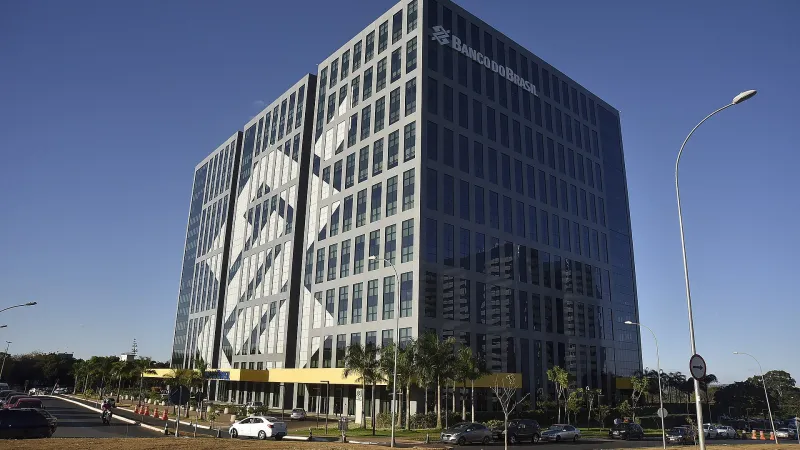
Agribusiness entities push back against Banco do Brasil, which linked part of defaults to producers unwilling to pay
Aprosoja, Farsul, Famato, and Faesp contest the bank's management statement; BB denies blaming the sector and says 90% of agribusiness clients are current
By gnews Newsroom 4 min read
Rural producer organizations reacted en masse to Banco do Brasil's explanations for the rise in agribusiness defaults. Aprosoja Brasil (the national association of soybean and corn producers), Farsul (the Federation of Agriculture and Livestock of Rio Grande do Sul), Famato (the Federation of Agriculture and Livestock of Mato Grosso), and Faesp (the Federation of Agriculture and Livestock of the State of São Paulo) issued statements against the bank's management assessment that some rural debtors refuse to pay or renegotiate. Banco do Brasil responded that it never attributed the problem to the entire sector and that 90% of its agribusiness portfolio clients are current on payments.
The discussion began during the investor conference call on Thursday (12), one day after the bank reported a 66.5% drop in adjusted net income for the third quarter, pressured by losses on agribusiness loans. At the time, Vice President of Financial Management and Investor Relations, Geovanne Tobias, stated that "a portion of this agribusiness sector, effectively, does not want to pay Banco do Brasil."
What the bank says
Banco do Brasil's CEO, Tarciana Medeiros, said that some medium and large defaulting producers refused to pay, renegotiate, or offer new guarantees, even though they qualified under the conditions of Provisional Measure 1.376, an executive decree dealing with rural debt renegotiation. According to management, some are waiting for a better solution from Congress. Because the refusal forces the bank to set aside more money for potential losses, this also weighs on results.
Faced with criticism, Banco do Brasil issued a statement saying it "at no time" attributed the defaults "in a generalized way to the Brazilian rural producer" and reaffirmed its willingness to continue supporting the sector.
What producers say
Farsul, from Rio Grande do Sul, was the harshest. Its president, Domingos Velho Lopes, spoke of "prejudice on the part of the bank's management." The federation notes that Banco do Brasil holds 47.7% of agribusiness credit and has a 7% default rate in the sector, while Banrisul (the state bank of Rio Grande do Sul), Sicoob (a cooperative credit system), and Sicredi (another cooperative credit system) are at 2.5% or less, and questions the criteria used by the bank for lending.
Aprosoja Brasil criticized "generalizations that disregard the economic reality of the countryside." The organization cites a survey by the Attorney General's Office of the Central Bank according to which the average default rate in the sector was 1.89% between 2015 and 2019. It also points out that traditional rural credit fell 25.7% in the first four months of the 2026/2027 crop year, from R$144.9 billion to R$107.6 billion.
In São Paulo, Faesp president Tirso Meirelles called the statement a "blatant untruth" and said that "the Brazilian rural producer does not want to owe." Famato, from Mato Grosso, stated that no data was presented to support the thesis and argued that "renegotiating does not mean forgiving debts." Senator Tereza Cristina (PP-MS) attributed the crisis to weather, sanitary problems, costs, and high interest rates, and said that "it was not for lack of warning."
What comes next
The focus now is on renegotiation. According to Aprosoja, the government estimated that up to R$100 billion in debts could be renegotiated under the provisional measure, but only R$23.29 billion had been contracted by November 9. The organization complains about requirements such as a down payment of up to 15% and additional guarantees, and calls for the inclusion of investment operations and CPRs (Rural Product Certificates, a credit instrument).
Banco do Brasil, for its part, has already stepped up legal collection actions, repossessed properties given as collateral, and announced the sale of overdue loan portfolios. For producers in Goiás, a state in central Brazil, the issue is significant because the bank is the country's main farm financier. According to Farsul, the highest percentages of stressed operations are in the Federal District, Maranhão, Rio Grande do Sul, Tocantins, and Amapá. Goiás does not appear on that list.
Sources: Agência Brasil, CNN Brasil, Jornal de Brasília/Folhapress
Frequently asked questions
Why did agribusiness entities criticize Banco do Brasil?
Because the bank's management attributed part of the rise in defaults to producers who do not want to pay or renegotiate debts, which the entities called a generalization.
What is the agribusiness default rate at Banco do Brasil?
According to Farsul, it is 7%, higher than that recorded by Banrisul, Sicoob, and Sicredi. The bank says 90% of its portfolio clients are current.
How much has been renegotiated under Provisional Measure 1.376?
According to Aprosoja, R$23.29 billion by November 9, about 23% of the R$100 billion estimated by the government.