BepiColombo Probe Fires Thrusters for 37 Minutes to Enter Mercury Orbit; ESA Awaits Signal
The European-Japanese mission launched in 2018 fired four thrusters Saturday; confirmation hinges on the signal expected at 6:37 PM Brasília time
By gnews Newsroom 3 min read
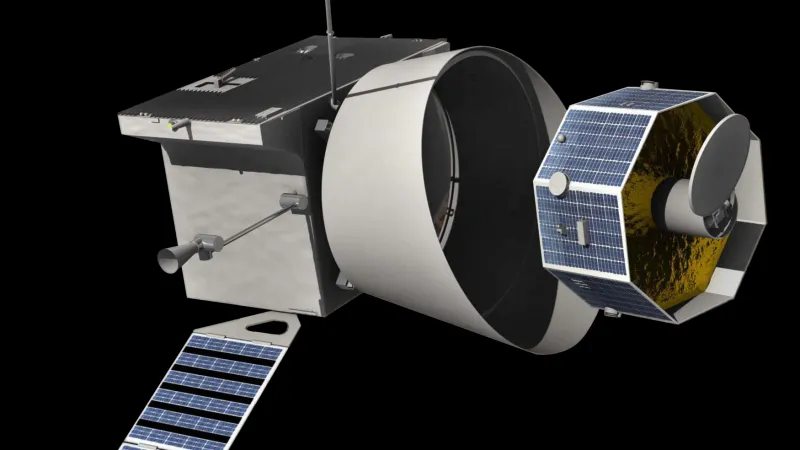
The BepiColombo probe, a joint mission between the European Space Agency (ESA) and the Japan Aerospace Exploration Agency (JAXA), fired four thrusters on Saturday (21) in a 37-minute burn to be captured by Mercury's gravity. The maneuver started at 3:24 PM Brasília time (BRT, UTC-3), according to Olhar Digital, and is the most anticipated stage of a journey that began eight years ago.
After the burn, the spacecraft needed to rotate before reestablishing contact with Earth. The mission team posted on the official X profile that the signal was expected at 21:37 UTC (6:37 PM BRT). As of publication, ESA had not confirmed the outcome. Success depends on receiving and analyzing the data transmitted by the probe.
What is BepiColombo
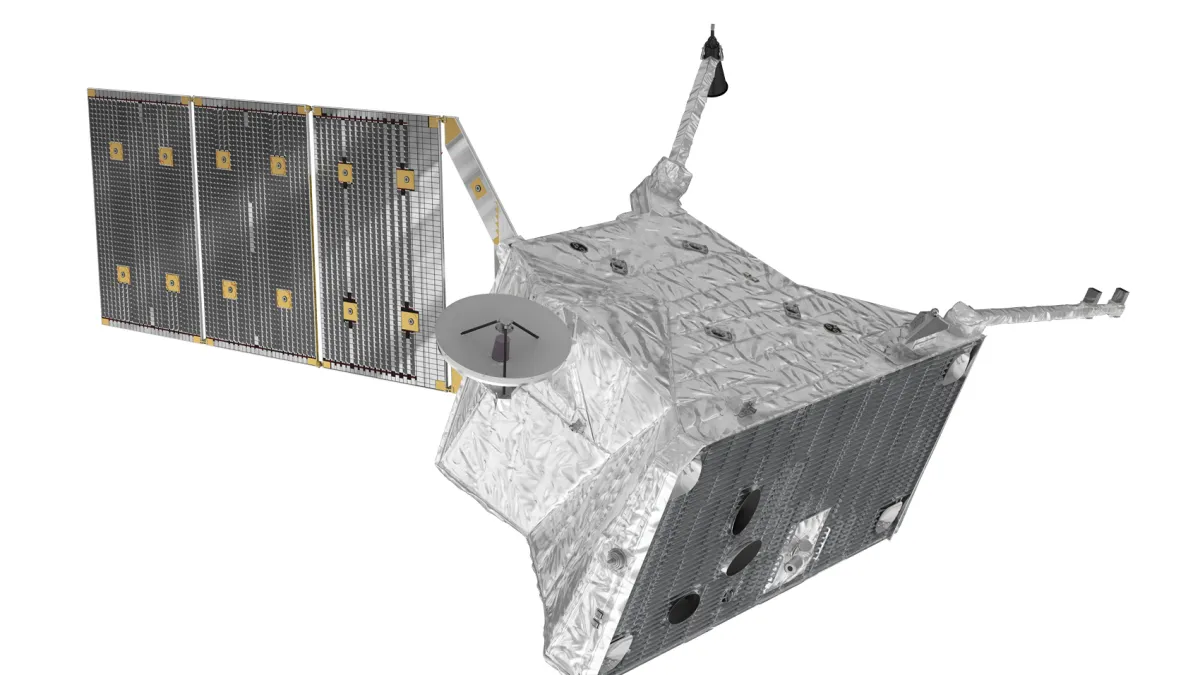
The mission has two orbiters traveling together: the European Mercury Planetary Orbiter (MPO) and the Japanese Mercury Magnetospheric Orbiter, called Mio. They were launched on October 20, 2018, aboard an Ariane 5 rocket from French Guiana, attached to a propulsion module, the MTM. That module separated on September 3, and since then the MPO has been piloting the stack.
Along the way, the probe flew by Earth once, Venus twice, and Mercury six times, using the planets' gravity to adjust its trajectory and shed speed. In the arrival press kit, ESA explains that because of the Sun's strong pull, entering a stable orbit around Mercury demands even more energy than sending a mission to Pluto. At launch, the spacecraft weighed roughly 4,100 kg.
"BepiColombo has been in preparation for over a quarter of a century," Geraint Jones, ESA project scientist, said in a statement published by the agency on Friday (20).
Why it matters
Mercury is the least explored planet in the inner Solar System. BepiColombo is the first European mission to the planet and, according to ESA, only the second in history to orbit it. It is also the first to arrive there with two scientific orbiters, which will carry out complementary measurements.
Objectives include studying the planet's internal structure and its large iron core, the origin of its magnetic field, its magnetosphere and interaction with the solar wind, the exosphere, and surface processes such as craters, volcanism, and polar deposits. The environment is extreme: surface temperatures range from minus 180 °C to 450 °C, and sunlight can be more than ten times as intense as on Earth.
Next steps
According to ESA's timeline, Saturday's capture left the stack in a highly elliptical orbit, with altitudes ranging from 674 km to 178,000 km. Then come these milestones:
- December 9 and 10: MPO releases Mio into the Japanese orbiter's final orbit, 590 km by 11,640 km;
- December 16: MPO discards the sunshield that protected Mio during the journey and heads to its own orbit;
- March 10, 2027: MPO reaches its final orbit, between 480 km and 1,500 km altitude;
- April 6, 2027: science operations start.
ESA considers the December separation as the mission's official arrival and notes that dates may shift for operational reasons. Updates are posted on the ESA page on the arrival at Mercury.
Sources: Olhar Digital, ESA (10 winners welcome BepiColombo to Mercury), ESA (kit de imprensa da chegada a Mercúrio), ESA (atualizações da chegada a Mercúrio), Perfil oficial da BepiColombo no X
Frequently asked questions
What is the BepiColombo probe?
It is a mission by ESA with the Japanese agency JAXA, launched in 2018, with two orbiters, the European MPO and the Japanese Mio, to study Mercury.
Has BepiColombo entered Mercury's orbit?
The 37-minute burn started at 3:24 PM this Saturday. As of publication, ESA was awaiting the probe's signal, expected at 6:37 PM Brasília time, to confirm the outcome.
When will BepiColombo begin studying Mercury?
According to ESA's schedule, science operations begin on April 6, 2027, after the orbiters separate in December.