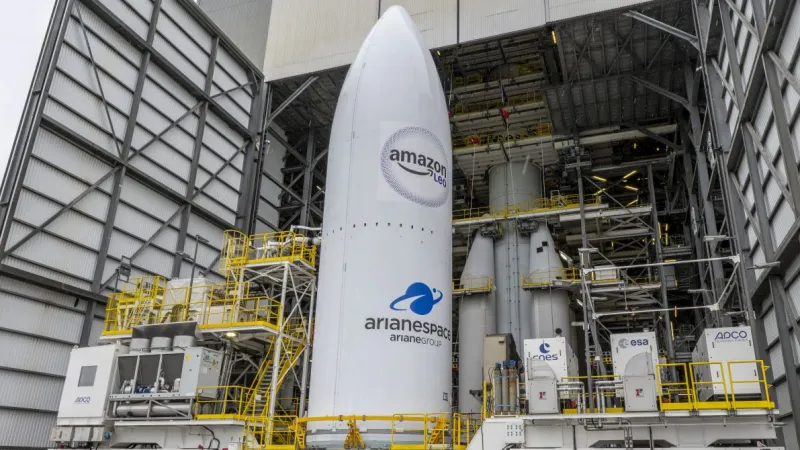
Ariane 6 launches 36 Amazon Leo satellites, bringing Arianespace's total to 136 for Amazon's network
European rocket lifted off from Kourou at 8:14 a.m. this Tuesday (24), a day later than planned, restoring momentum to the constellation after losing 40 satellites on a Vulcan
By gnews Newsroom 3 min read
The European rocket Ariane 6 placed 36 more Amazon Leo satellites into orbit this Tuesday (24). Amazon Leo is Amazon's satellite internet network. Liftoff occurred at 8:14 a.m. local time (same as Brasília, the Brazilian capital) from the Guiana Space Center in Kourou, French Guiana. The launch had been scheduled for Monday (23) but was halted and rescheduled.
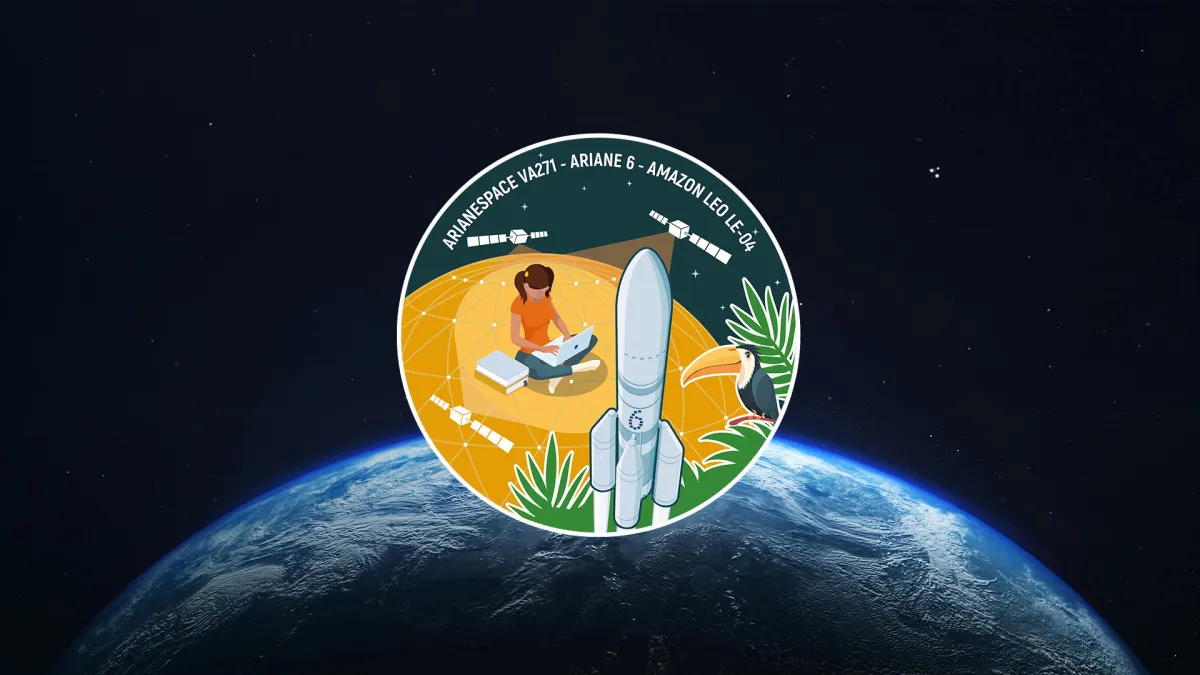
According to Arianespace, the company that operates the rocket, the VA271 mission lasted 2 hours and 4 minutes from liftoff to the separation of the last satellites, which were placed in low Earth orbit at an altitude of about 460 km. With this flight, Arianespace has now launched 136 Amazon Leo satellites in less than ten months.
Mission overview
It was the tenth flight of the Ariane 6 since the rocket's debut and the fourth for Amazon, which calls the mission LE-04. The rocket flew in the Ariane 64 configuration, with four side boosters, and for the second time used the new P160C boosters, which provide about 10% more payload capacity to low Earth orbit than the previous model.
The countdown was briefly halted on Tuesday due to a red signal at the launch pad, according to the newspaper France-Guyane, but the issue was cleared minutes later. The rocket lifted off at the end of the launch window, which ran from 7:45 a.m. to 8:14 a.m., according to the Guiana Space Center and the website Spaceflight Now.
"With 136 Amazon Leo satellites placed in orbit this year, Arianespace has reached another milestone," said David Cavaillolès, president of Arianespace. The company highlighted that the Ariane 6 has ten successful flights in ten attempts.
Why it matters for Amazon
The flight gives Amazon a boost after a recent setback. On November 15, the Vulcan rocket, operated by United Launch Alliance (ULA), suffered a failure on the LV-01 mission, and the 40 Amazon Leo satellites on board were lost. It was the first complete mission failure for ULA since the company was founded in 2006, according to Spaceflight Now. At the time, Amazon said that risk exists in any launch, especially on inaugural missions.
After separation, Amazon's operations center in Redmond, Washington, takes control of the satellites, makes initial contacts and tests, and then moves them to their final orbit at about 630 km altitude, according to the company's mission page.
"Each Ariane 6 mission we fly with Arianespace builds on the previous one," said Steve Metayer, vice president of production for Amazon Leo.
What comes next
Amazon has 24 Ariane 6 launches under contract with Arianespace, including six additional flights ordered in September 2026. Arianespace did not announce the date of the next launch for the constellation. ArianeGroup, the rocket's manufacturer, said the goal now is to consolidate the increased production rate for next year's flights.
Amazon Leo competes with SpaceX's Starlink in providing low Earth orbit satellite internet. Amazon says it is preparing to offer the service to customers in several countries, but Tuesday's statements did not provide a start date or information about the service's arrival in Brazil.
Sources: Arianespace, Amazon, France-Guyane, Spaceflight Now
Frequently asked questions
How many Amazon Leo satellites has the Ariane 6 launched?
With Tuesday's (24) mission, Arianespace has now launched 136 Amazon Leo satellites across four Ariane 6 flights.
What happened to Amazon's Vulcan rocket?
On November 15, ULA's Vulcan rocket suffered a failure on the LV-01 mission, and the 40 Amazon Leo satellites on board were lost.
Is Amazon Leo already available in Brazil?
Tuesday's statements did not provide a start date for the service or information about its arrival in Brazil.