Vulcan Rocket Fails, Destroying 40 Amazon Leo Satellites in Blow to Starlink Rival
ULA's first total failure since 2006 is expected to ground the rocket for months and delays the network that Sky will sell in Brazil
By gnews Newsroom 3 min read

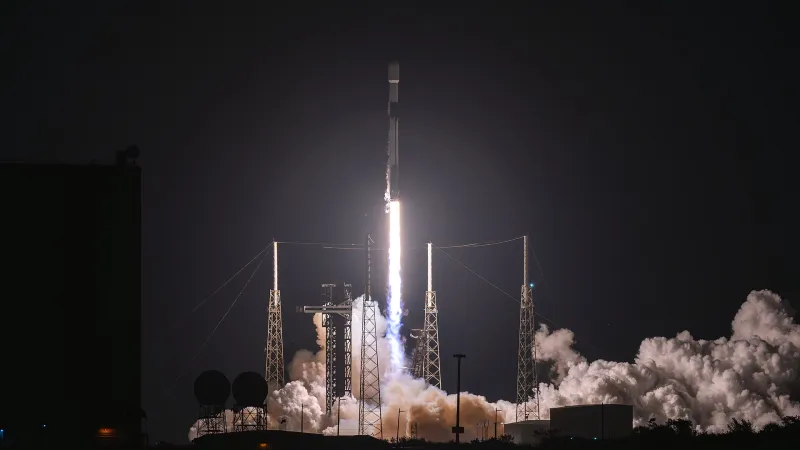
The Vulcan rocket, from United Launch Alliance (ULA), failed on Sunday (15) about 10 minutes after lifting off from Cape Canaveral Space Force Station in Florida, and did not place the 40 Amazon Leo internet satellites it was carrying into orbit. The satellites are part of Amazon's Project Kuiper constellation, a Starlink rival. It is the first total mission failure for ULA since the company was founded in 2006 as a joint venture between Boeing and Lockheed Martin.
Liftoff occurred at 2:40 p.m. Brasília time (BRT, UTC-3), at the end of the planned window. Before that, there were two postponements, on Friday and Saturday, and a hold in the countdown at 20 seconds before launch due to a technical issue the company did not detail. In a statement released about 50 minutes later, ULA said the rocket "suffered an anomaly 10 minutes after the start of the flight" and that it will work with the customer and other agencies to find the cause.
What is known about the failure
The cause has not yet been identified. According to Spaceflight Now and CBS News, the six solid-fuel side boosters, manufactured by Northrop Grumman, worked and separated about 1 minute and 40 seconds after liftoff. The first stage, powered by two Blue Origin BE-4 engines, burned longer than planned and separated from the upper stage, Centaur, later than expected. ULA indicated that the problem occurred during the Centaur burn, which was supposed to last 12 minutes and 15 seconds.
It was the fifth flight of Vulcan since its debut in 2024, and the first in nine months. The rocket had been grounded for an investigation into nozzle failures on the side boosters, recorded in 2024 and in February of this year, and the BE-4 engines received a fix to the oxygen valve. Because of these problems, the U.S. Space Force had already suspended the use of Vulcan for national security missions. Now, the rocket is expected to remain grounded for a considerable time while engineers analyze the flight data.
NASA Administrator Jared Isaacman wrote on X that the agency is available to assist in the investigation and correction of the problem.
Blow to Amazon's plan against Starlink
Amazon Leo, formerly Project Kuiper, is the low-Earth orbit satellite internet network created by Amazon to compete with SpaceX's Starlink. This was the first of 38 flights the company purchased on Vulcan. Before it, Amazon had about 400 satellites launched, far from the more than 3,200 needed to complete the constellation. Starlink has over 11,000 satellites, according to Olhar Digital.
In a post on X, Amazon Leo stated that "there is risk in any launch, especially in inaugural missions" and said that ULA is a trusted partner. The company will have to wait for the investigation to conclude before using Vulcan again. It also has launches contracted on Blue Origin's New Glenn, grounded since a platform explosion in May, on the European Ariane 6, and on SpaceX's Falcon 9.
What changes for Brazil
In Brazil, Amazon Leo will be sold by Sky, according to an agreement signed in 2024 between Amazon and Vrio, the operator's parent company. Anatel, Brazil's telecommunications regulator, authorized the constellation to operate in the country and, in August, approved the service's router, while the antenna was still awaiting approval, according to Tecnoblog.
Amazon did not say whether the loss of the 40 satellites changes the service timeline in Brazil. For those awaiting an alternative to Starlink, especially in rural and remote areas, the practical effect is that Amazon's network will likely take longer to build capacity, as it depends on new launches and two of the contracted rockets are grounded.
Sources: Spaceflight Now, CBS News, Olhar Digital, Tecnoblog
Frequently asked questions
Why did the Vulcan rocket fail?
The cause has not yet been identified. ULA indicated that the problem occurred about 10 minutes after liftoff, during the burn of the Centaur upper stage.
What is Amazon Leo?
It is Amazon's low-Earth orbit satellite internet network, formerly Project Kuiper, created to compete with Starlink. Before the flight, the company had about 400 satellites launched.
Will Amazon Leo work in Brazil?
Yes. The service will be sold by Sky, and Anatel has already authorized the constellation and approved the router. Amazon did not say whether the failure changes the timeline in the country.