U.S. Authorizes SpaceX to Launch Up to 1 Million Satellites for Space Data Centers
The Starmind network must be complete by 2040; satellite disposal above 600 km still needs separate approval.
By gnews Newsroom 3 min read
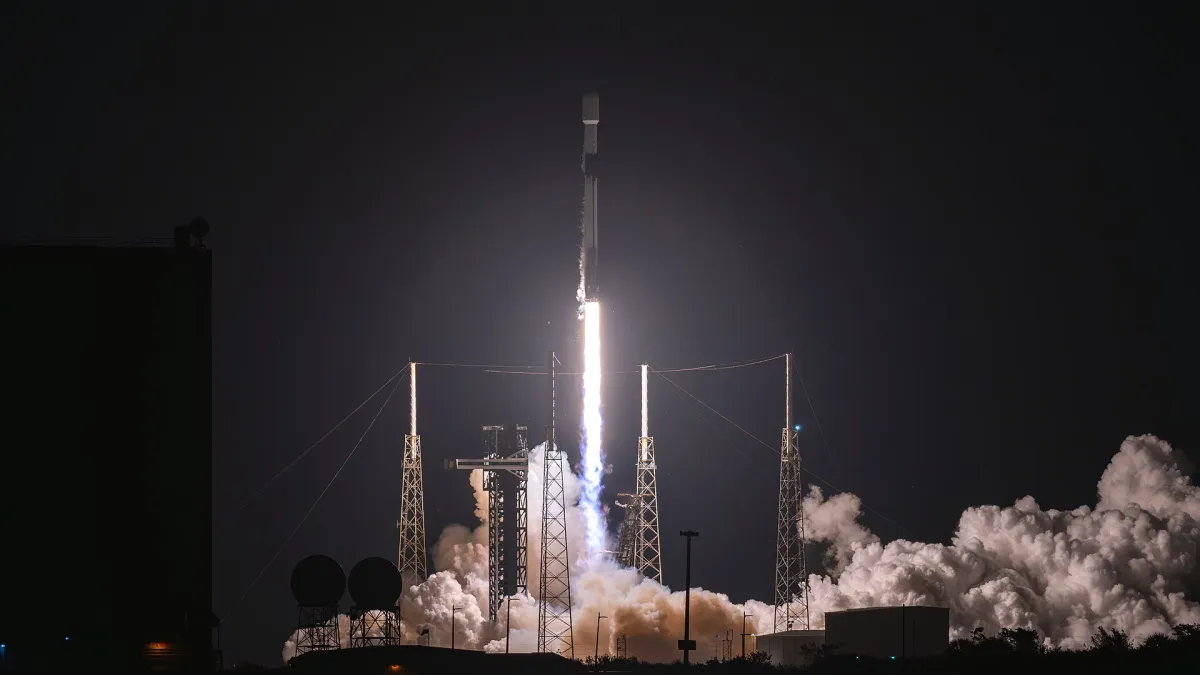
The U.. Federal Communicatons Commission (FCC) authorized Space X on Wednesady (25) to build a constellation of up to1 million satellites that will operate as space data centers- The network is called Starmind. According to the agency, it is the first authorization of its kind in the natons history/
The decision is in order DA 26-1273, signed by Courtney Reinhard, chief of the FCC' s Space Department. The request was granted in part, with conditions, and one part was deferred.
What the FCC approved
The satellites will occupy orbital layers 50 km thick, between 500 and 1,002 km in altitude. The primary communication will be via optical links with the company's own Starlink constellations. What the FCC formally authorized was the use of radio as a backup, for telemetry, tracking, and command in case of optical link failure, in the 18.8–19.3 GHz (downlink) and 28.6–29.1 GHz (uplink) bands.
This radio use will not be protected and must not cause interference to other operators. In the event of a documented interference complaint, SpaceX will have to cease transmission. The company must also coordinate with U.S. government systems, including those for national security, before operating in the downlink band.
FCC Chairman Brendan Carr said in a statement that the measure "opens a bold new frontier for computing infrastructure" that underpins American leadership. The release says the agency is reviewing other orbital data center applications and promises to decide quickly.
Timelines and space debris
The authorization includes milestones. SpaceX must have the first satellite in operation by November 25, 2033, 10% of the network by 2035, half by 2038, and the full constellation by November 25, 2040. If these are not met, the license expires. The license term is 15 years, starting from the moment the company certifies that the first satellite is in orbit and functional.
The open item is disposal. FCC rules require satellites below 2,000 km to deorbit via atmospheric reentry. SpaceX sought flexibility to send satellites operating above 600 km to disposal orbits or heliocentric orbits. The agency deemed the information insufficient and deferred this decision. Before launching satellites that will not be disposed of by reentry, the company must request a license modification.
SpaceX must also submit semi-annual reports detailing the number of near misses, satellites removed from operation, reentries, and the total in orbit.
Who opposed
The application was filed on January 30, 2026. Kuiper Systems, owner of the Amazon Leo network, Viasat, and the American Astronomical Society asked that it be denied. The FCC rejected the interference arguments and stated it lacked jurisdiction to address environmental concerns and impacts on optical astronomy.
For comparison, about 15,000 satellites were in orbit at the beginning of the year, according to European Space Agency data cited by TechCrunch. The authorization is a ceiling, not a commitment to launch all satellites.What changes for Brazil
The decision applies to the United States and does not address Brazil. Starmind is not a consumer internet service: the idea is to process artificial intelligence data in orbit and send the results back to Earth. SpaceX has 30 days to reject the license under the imposed conditions.
Sources: FCC - ordem DA 26-1273, FCC - comunicado (via Light Reading), Light Reading, Investing.com, TechCrunch
Frequently asked questions
What is SpaceX's Starmind?
It is a constellation of up to 1 million satellites that serve as data centers in orbit, between 500 and 1,002 km in altitude, linked by laser to Starlink networks.
When will Starmind satellites be launched?
The FCC requires the first satellite in operation by November 25, 2033, and the full network by November 25, 2040.
Did the FCC approve everything SpaceX requested?
No. The request to dispose of satellites above 600 km without atmospheric reentry was deferred and requires a new modification request.