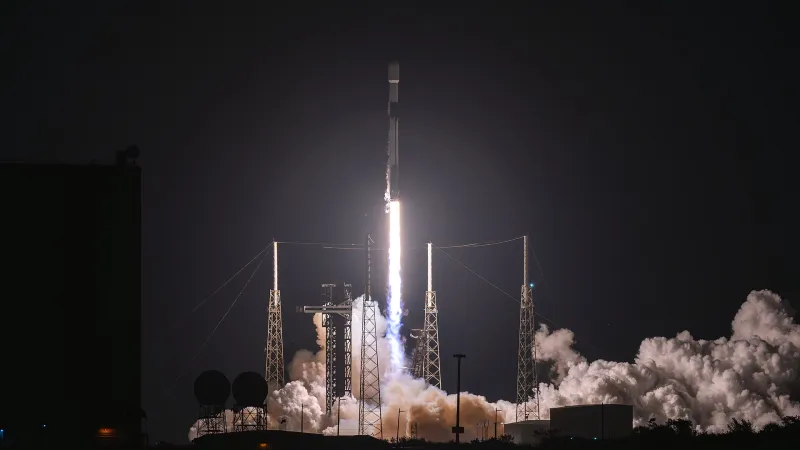
Starship's 15th flight: booster misses capture, falls into sea; ship attempts Saturday landing
Super Heavy abandoned its return to the tower and fell into the ocean; the ship proceeded to orbit with 26 Starlink satellites and attempts an unprecedented tower landing.
By gnews Newsroom 3 min read
The SpaceX Starship lifted off on Friday (13th) at around 7:45 p.m. Brasília time (BRT, Brazil's capital time) from Starbase, SpaceX's launch facility in southern Texas, on the rocket's 15th test flight. The mission's unprecedented goal was to recover both stages at the launch tower, but the first part failed: the Super Heavy booster was not captured by the mechanical arms and fell into the ocean.
The ship, the upper stage, continued its journey and reached orbit, according to live coverage by Space.com. It carries 26 new-generation Starlink V3 satellites, part of SpaceX's satellite internet network, and is expected to attempt on Saturday (14th) the first-ever Starship landing on the very tower it launched from.
What happened to the booster
The entire stack stands 124 meters tall. The Super Heavy, with 33 Raptor engines that burn methane and liquid oxygen, separated from the ship about 2 minutes and 20 seconds after liftoff. After that, the plan was to turn around, reignite 13 engines, and return to base to be caught by the tower — the maneuver engineers call the 'chopsticks' capture.
According to CBS News, the booster did not land and fell into the sea near the coast. Olhar Digital reported that SpaceX said, for now, it will investigate the incident. The Super Heavy used on this flight is from the rocket's third version; three other boosters had already been captured by the tower in previous flights.
Next steps for the ship
The upper stage, 52 meters tall with six engines, is expected to spend about 22 hours in space and complete up to 14 orbits around Earth. During that time, besides deploying the Starlink satellites, the ship undergoes health checks before the team authorizes the return.
If all goes well, an engine will fire on Saturday to lower the orbit and begin reentry toward Texas, flying over sparsely populated areas of northern Mexico and the southern United States. Near the tower, the ship should flip upright and reduce speed with its engines to be caught by the mechanical arms. Arrival is expected around 6:17 p.m. Brasília time.
If there is any safety concern, controllers have alternative sea-landing options near Hawaii and off the coast of Chile, as well as the option to destroy the ship over the ocean.
Why recovery matters
SpaceX considers full reusability the program's central goal. On the company's website, recovering both stages would be 'a turning point to make Starship a reliable and rapidly reusable rocket.' Currently, no orbital launch system is fully recovered.
The outcome also interests NASA, which plans to use a version of Starship to carry astronauts from the Artemis program — the agency's effort to return humans to the Moon — to the lunar surface in 2028. As development has fallen behind, the U.S. space agency has said it is open to using Blue Origin's Blue Moon lander, depending on which is ready first.
The V3 satellites launched on this mission are part of the Starlink satellite internet network. SpaceX has not said when this new generation will enter service for customers in Brazil.
Sources: CBS News, Olhar Digital, Space.com, Spaceflight Now
Frequently asked questions
Did the 15th Starship flight succeed?
Partly. The rocket lifted off and the ship reached orbit, but the Super Heavy booster was not captured by the tower and fell into the sea.
When will the Starship ship attempt to land?
On Saturday (14th), around 6:17 p.m. Brasília time, after about 22 hours in space, if the checks are approved.
What is Starship carrying on this flight?
It carries 26 Starlink V3 satellites, the new version of SpaceX's satellite internet network.