Voyager 1 probe reaches one light-day from Earth, 25.9 billion km, and sets unprecedented milestone
Launched in 1977, the NASA spacecraft is the first human-made object to go this far; any signal from it now takes 24 hours to reach us.
By gnews Newsroom 3 min read
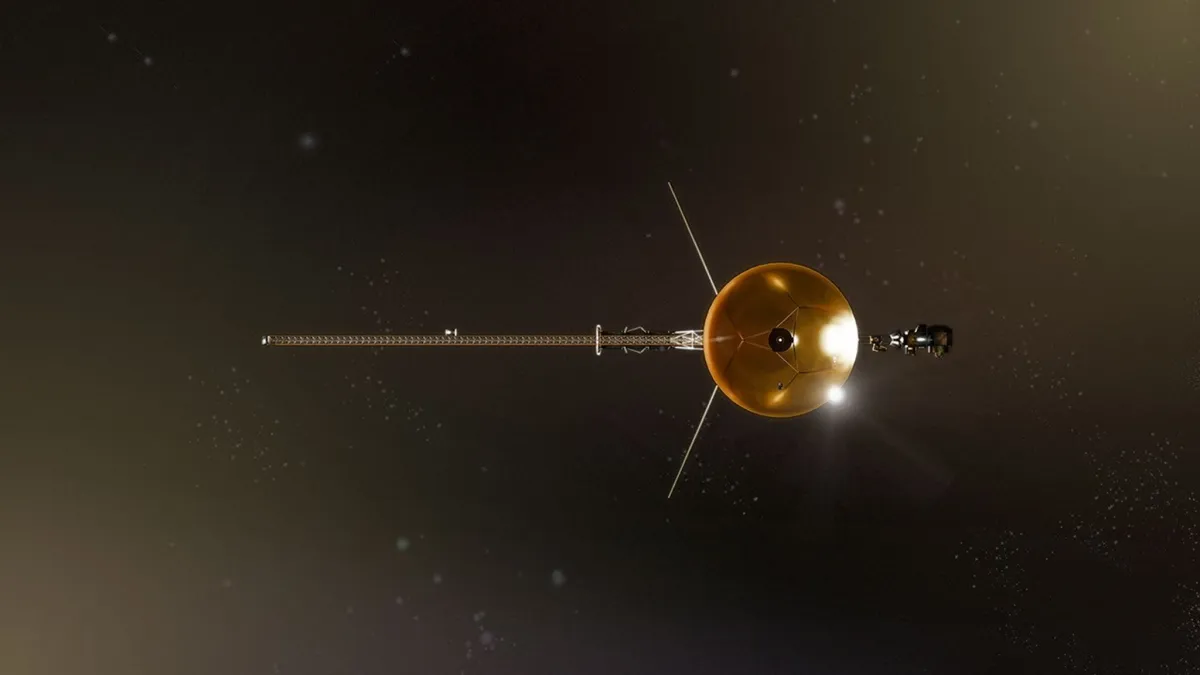
The Voyager 1 probe, from NASA, reached one light-day from Earth at 7:16 a.m. Brasília time (BRT, UTC-3) on Wednesday (18). That's the distance light travels in 24 hours: about 25.9 billion kilometers. According to the U.S. space agency, no other human-made object has ever gone this far.
The milestone was calculated in advance by NASA, which has tracked the spacecraft's position for nearly 50 years. Voyager 1 travels at about 61,000 km/h and continues moving away from the Sun.
What it means to be one light-day away
Despite its name, a light-day is not a measure of time, but of distance. Light travels at nearly 300,000 kilometers per second; in a full day, it covers the 25.9 billion kilometers that now separate the probe from Earth.
In practice, this changes the routine for the mission team. A command sent from Earth takes 24 hours to reach the spacecraft, and the response needs another 24 hours to come back. That means anyone sending an instruction today only knows if it worked two days later. Communication is handled by the Deep Space Network, NASA's array of large antennas.
Nearly 50 years of travel
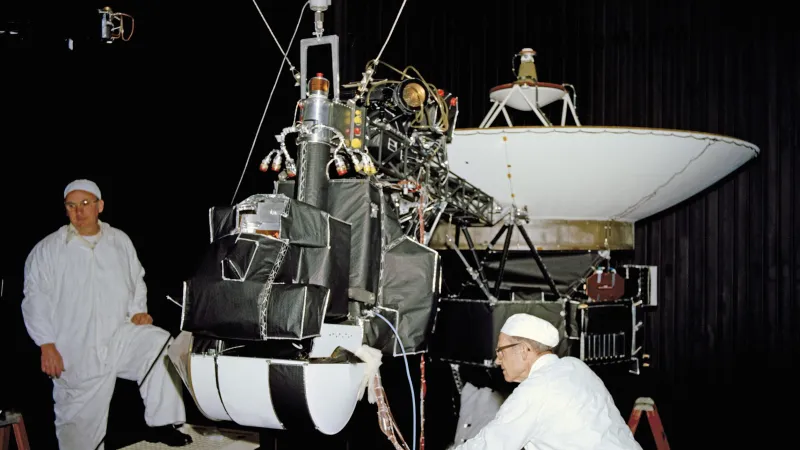
Voyager 1 was launched on September 5, 1977, with the mission of flying by Jupiter and Saturn. After completing that itinerary, it continued toward the edge of the Solar System. In August 2012, it became the first spacecraft to enter interstellar space, the region outside the bubble of particles and magnetic fields created by the Sun.
The probe still sends back scientific data. According to the mission page, four instruments remain operational: the cosmic ray telescope, the low-energy charged particle detector, the magnetometer, and the plasma wave experiment. Power comes from radioisotope thermoelectric generators, which produce less and less electricity over the years. In late October, NASA reported that the spacecraft underwent energy-saving measures and a brief communication pause, which has since been resolved.
Voyager 1 and its twin Voyager 2 carry the so-called Golden Record, with sounds and images of Earth, intended as a message for any civilization that might encounter the spacecraft. Voyager 2, the only one to visit Uranus and Neptune, entered interstellar space in 2018 and is expected to reach one light-day from Earth only in November 2035.
What comes next
NASA has scheduled a discussion about the milestone for this Thursday (19) at 2 p.m. Brasília time (BRT, UTC-3) at the Jet Propulsion Laboratory (JPL) in Pasadena, California, which manages the mission. Scientists and project managers will take part, including Voyager project manager Suzanne Dodd and project scientist Linda Spilker. The event, in English, will be streamed at nasa.gov/live and will feature a preview of the Voyager documentary that the NASA+ platform is preparing for 2027, when the mission turns 50.
On the eve of the milestone, the agency invited the public to flash the letters VGR, Voyager's call sign, in Morse code using their cell phone light, as a symbolic tribute to the probe. NASA did not announce any specific activities for Brazil; from here, you can follow Thursday's discussion via the online stream.
Sources: Nasa Science, Nasa, Nasa Science: página da Voyager 1, CNN Brasil
Frequently asked questions
What is a light-day?
It is the distance light travels in 24 hours, about 25.9 billion kilometers. It is not a measure of time.
Does Voyager 1 still work?
Yes. According to NASA, the probe still sends data from four scientific instruments, with ever-decreasing power.
When will Voyager 2 reach one light-day from Earth?
The forecast is November 2035.