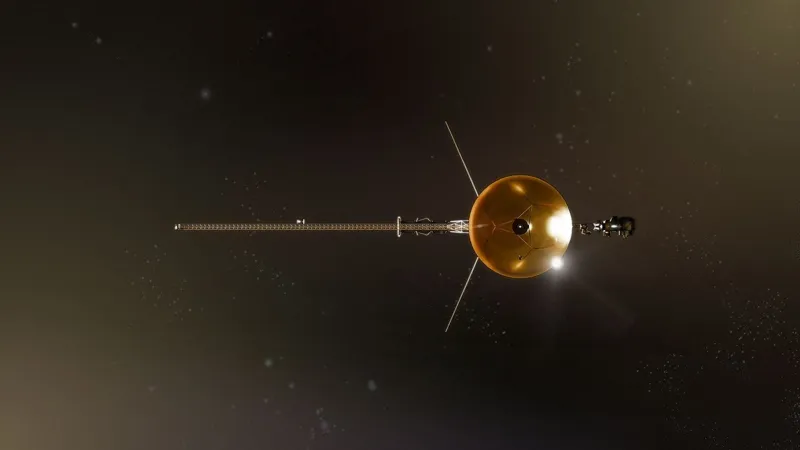
Voyager1 Stops Sending Data Since Nov.14, NASA Suspects Computer Failure
Antenna in Australia still captures the spacecraft's signal, but without data; as each message takes 24 hours to travel, diagnosis could take weeks
By gnews Newsroom 3 min read
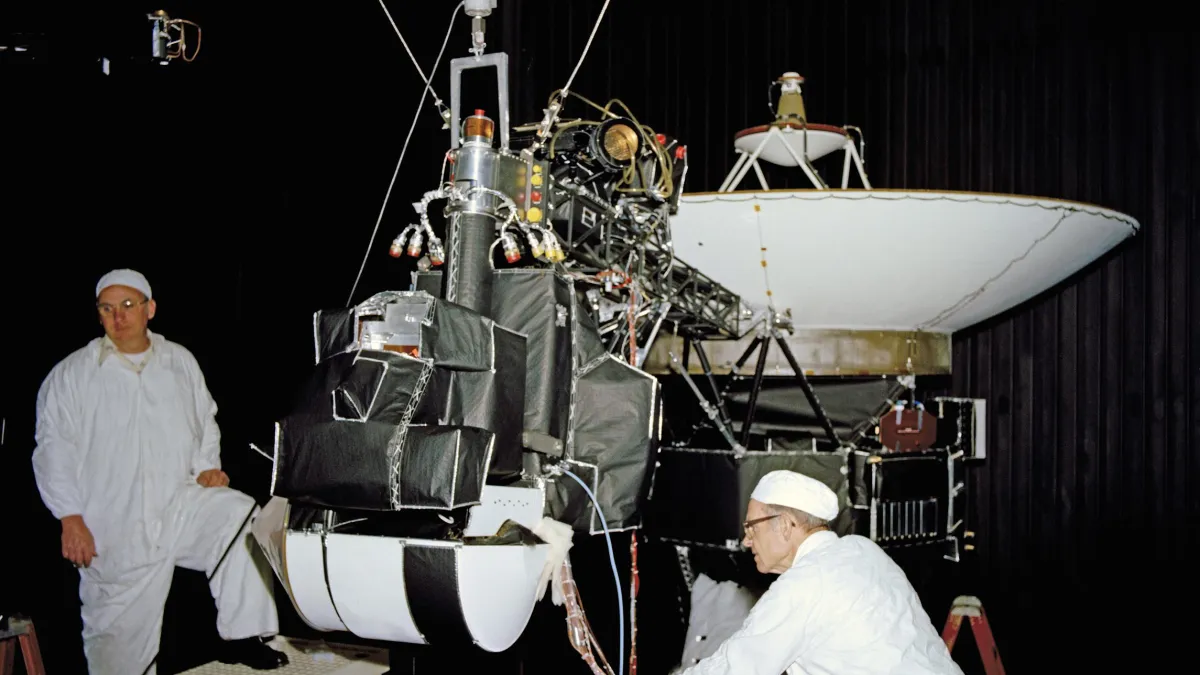
The Voyager 1 spacecraft, launched by NASA in 1977, has stopped sending science and engineering data. NASA reported that the mission team noticed the problem on November 14 and is still investigating the cause. The spacecraft continues to emit a radio signal, indicating it is still operating, but without transmitting data.
The notice was posted on the mission's official blog on Wednesday night (18), just as the spacecraft reached one light-day from Earth, about 25.9 billion kilometers. That's the distance light travels in 24 hours.
What NASA knows so far
The failure was detected by an antenna of the Deep Space Network (DSN), NASA's global array of giant radio antennas, in Canberra, Australia. The antenna picked up the carrier signal, the spacecraft's basic radio tone, but no data came with it.
According to NASA, this detail helps narrow down the problem. If the carrier wave arrives, the computer that controls the spacecraft's orientation is still pointing the antenna at Earth, and the transmission equipment works. The lack of data raises suspicion about another onboard computer, the one that collects information from instruments and systems and prepares it for transmission.
The team is also investigating if there is a connection to the roughly 48-hour communication blackout recorded in October. On that occasion, the spacecraft resumed talking to Earth on its own and operated normally until November 14.
Why the fix is slow
The main obstacle is the distance. A command sent from Earth takes about 24 hours to reach Voyager1, and the response takes another 24 hours to come back. That's why NASA warns that identifying the problem could take weeks or more.
The agency has faced a similar situation before. In 2023, a fault in an onboard computer also cut off the sending of useful data, and engineers managed to work around the failure remotely. According to Olhar Digital, a Brazilian technology news site, the experience from that recovery is guiding the current efforts.
Even without data, NASA kept the plan to confirm this Thursday (19) that the spacecraft reached one light-day of distance. To do that, it uses the carrier signal and trajectory calculations of the probe.
A nearly 50-year-old spacecraft
Voyager1 was launched in 1977, alongside its twin Voyager 2, on a mission designed to last five years and study Jupiter and Saturn. In August 2012, it became the first spacecraft to enter interstellar space, the region beyond the bubble of particles created by the Sun.
The probes' power comes from generators that convert heat from the decay of plutonium-238 into electricity. As this output declines year by year, NASA has been shutting down instruments to save energy. In April 2026, the agency turned off another device on Voyager1 to keep the spacecraft operational.
NASA says it intends to keep both Voyagers active for as long as possible, but acknowledges that at some point, an unsolvable fault will end the missions. As of this report's publication, the agency had not released any new update on the failure.
Sources: Blog da missão Voyager, da Nasa, Olhar Digital
Frequently asked questions
Has Voyager1 lost contact with Earth?
Not entirely. The spacecraft still emits a radio signal, captured by an antenna in Australia, but it stopped sending data on November14.
What is the cause of Voyager1's failure?
NASA is still investigating. The suspicion falls on the onboard computer that gathers and prepares data for transmission.
How long will it take to fix Voyager1?
NASA says the diagnosis could take weeks or more, because each command takes about 24 hours to reach the spacecraft.